DMUE (Drainage Maintenance Utility Easement): Why Access Matters for Safety, Compliance, and Flood Prevention
A recent detention basin visit in Charlotte highlighted a key truth: DMUE access isn’t just paperwork—it keeps inspectors safe, prevents flooding, and helps owners stay compliant with Charlotte’s PCSO.
I recently inspected a detention basin for a local church in Charlotte, and immediately noticed No Trespassing signs around the parcel. A faint track through tall, overgrown grass suggested the basin hadn’t been maintained in years—common when vegetation is allowed to take over. About 200 feet into the woods, I encountered what appeared to be an established encampment hidden from the parking lot. Given the posted signs and the safety concerns, I made the call to stop and reschedule the inspection.
That moment is a clear reminder: DMUE—Drainage Maintenance Utility Easement—isn’t just for regulators. It’s what allows safe, reliable access so inspectors can do their jobs and owners can keep properties from flooding during storms.
What is a DMUE?
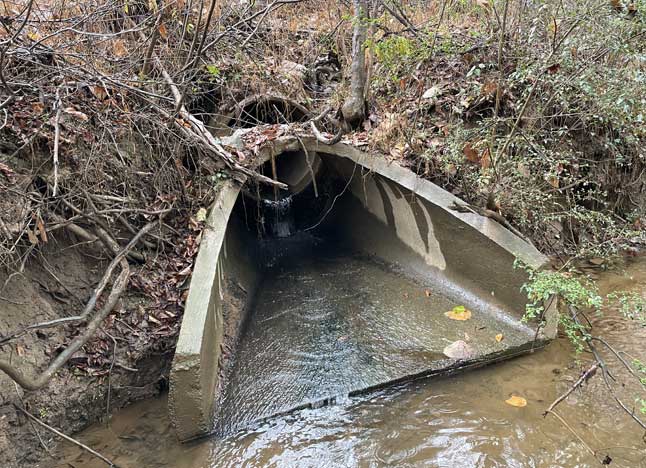
A Drainage Maintenance Utility Easement (DMUE) is a recorded easement that preserves access to stormwater infrastructure—detention basins, pipes, inlets, outfalls, spillways, energy dissipators, and channels—so these assets can be inspected, maintained, and repaired over the life of the site. In Charlotte-Mecklenburg, DMUEs work hand-in-hand with the Post-Construction Stormwater Ordinance (PCSO) to ensure stormwater controls (SCMs/BMPs) remain functional.
In plain language: a DMUE is the right to get to the drainage system so it can be kept working and safe.
Why DMUE Access Matters
- Safety for inspectors and contractors. Clear, lawful access limits risk when vegetation is head-high, slopes are slick, or when there are unknown site users.
- Compliance for owners. PCSO requires SCMs to be accessible for routine inspections and maintenance.
- Flood prevention. If outfalls, orifices, risers, and spillways can’t be reached, debris and sediment accumulate—parking lots, drive aisles, basements, and roads become vulnerable.
- Liability and cost control. Unmaintained systems lead to erosion, sinkholes around structures, pavement failures, and costly emergency repairs.
Common DMUE Issues We See in Charlotte
- Overgrowth: woody vegetation, vines, and briars blocking paths, headwalls, and control structures.
- Fences & gates without access coordination: locked without an owner contact, or no gate at all.
- Encroachments: sheds, dumpsters, trailers, or landscaping built inside the easement.
- Signage conflicts: blanket No Trespassing signs without posted inspection contact info or access instructions.
What Owners Are Responsible For (PCSO Context)
While each municipalities’ permit/plan governs specifics, owners are typically responsible for:
- Maintaining access within the DMUE (mowed/cleared paths wide enough for safe foot access—often 5–10 ft).
- Routine maintenance of the SCM: debris & sediment removal, vegetation management, erosion repairs, and structure upkeep.
- Providing inspection access upon request and keeping contact info current.
- Correcting deficiencies identified in inspection reports within required timelines.
Note: Always refer to your as-built plans, the operations and maintenance (O&M) plan, and current local requirements.
How to Verify You Have a DMUE on Your Property
- Approved Plans: Site/Civil sheets will often show easements and any access routes to SCMs.
- As-Built / O&M Manual: Often includes access notes, safety features, and maintenance frequencies.
- Ask Your Engineer or Municipality: Planning/Stormwater can often confirm easement records and PCSO obligations.
A Practical DMUE Access & Maintenance Checklist
Before an inspection
- Confirm ownership/manager contact and provide an inspection window.
- Verify DMUE limits and where gates/paths are.
- If signage says No Trespassing, ensure written permission or on-site escort.
- Bring appropriate PPE (boots, gloves, hi-viz) and follow a buddy system for remote basins.
- Pre-screen with aerials/Street View to identify overgrowth or steep slopes.
Site access & safety
- Gates unlocked or a key/escort available.
- Path cleared: vegetation trimmed to ground, no tripping hazards.
- Structures visible: riser, orifice, trash rack, outlet, and emergency spillway.
- No encroachments in the easement (sheds, dumpsters, fences).
- If you encounter unauthorized occupants or hazards, stop work and reschedule with the owner and authorities as appropriate.
Ongoing maintenance
- Mow/brush-cut on a set schedule (growing season).
- Remove sediment/debris around inlets/outlets after major storms.
- Repair erosion promptly; re-establish turf and armor as designed.
- Keep as-builts/O&M on file and update contacts annually.
- Log inspections (date, findings, photos, actions taken).
Takeaway from Yesterday’s Site Visit
Despite posted signs, the DMUE should allow lawful, coordinated access to the detention basin. But safety comes first. When signs, overgrowth, or encampments raise risk:
- Pause, inform the owner/manager, and reschedule with escorted access.
- Restore the DMUE corridor (brush-cut, remove encroachments, establish a stable path).
- Document conditions and plan corrective maintenance so inspections—and storm events—don’t become emergencies.
Need help restoring DMUE access or scheduling an inspection?
We can review your plats and plans, clear and re-establish access corridors, and perform SCM inspections, maintenance, and repairs anywhere in the Charlotte metro.