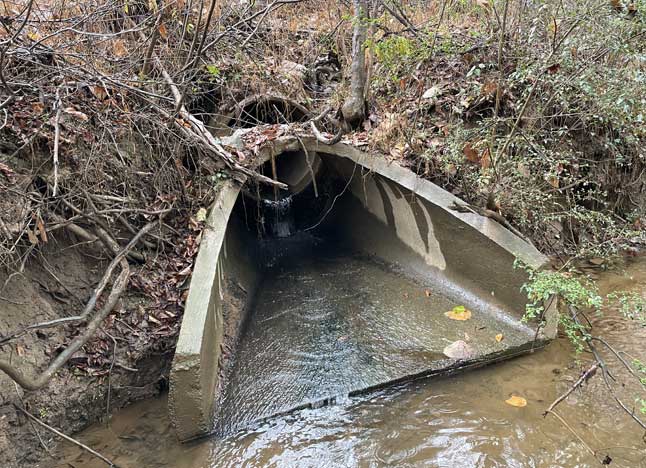
Hydrovac Services for Stormwater Infrastructure in Charlotte, NC: What Owners and Engineers Need to Know
Hydrovac services play a critical role in safely maintaining stormwater infrastructure. Learn how hydrovac works, where it’s used, the difference between truck types, and how Charlotte property owners and engineers should scope this work.
Hydro excavation—commonly referred to as hydrovac services—is one of the most effective tools available for maintaining and repairing stormwater infrastructure. Yet it is often poorly explained, misunderstood, or applied without proper oversight.
For commercial property owners, developers, engineers, industrial facilities, and high-rise decision makers, understanding how hydrovac works—and when it should be used—directly impacts safety, compliance, and long-term system performance.
Having worked across thousands of stormwater structures throughout the Charlotte region, we routinely serve as an owner’s representative, helping clients scope, oversee, and execute hydrovac work correctly.
What Is Hydrovac?
Hydrovac combines pressurized water with high-powered vacuum suction to loosen and remove material from underground or enclosed structures. The removed material—sediment, debris, organic matter, or slurry—is conveyed through a hose and stored in an onboard debris tank.
In stormwater applications, hydrovac provides a non-destructive method of cleaning and excavation that minimizes damage to infrastructure and reduces safety risks associated with confined space entry and mechanical digging.
Common Stormwater Applications for Hydrovac
Sediment, Leafy Debris, and Vegetative Removal
Stormwater systems are designed with finite storage capacity. Over time, that capacity is reduced by:
- Sediment accumulation
- Leafy debris and organic matter
- Vegetative growth and root intrusion
Hydrovac allows for precise removal of these materials from structures without damaging concrete surfaces, brick block walls, or prefabricated systems. This makes it particularly effective for aging or sensitive infrastructure where aggressive mechanical cleaning could cause harm.
Curb Inlets and Drop Inlets
Curb and drop inlets frequently appear clear at the surface while being heavily obstructed below grade. Common issues include:
- Sediment buildup at pipe inverts
- Trapped organic debris below grates
- Restricted flow at outlet connections
Hydrovac enables full-depth cleaning of these structures while preserving inlet geometry and downstream connections—critical for maintaining design flow capacity.
Confined Space Entry Cleaning (Remote Hose Work)
Many underground stormwater structures qualify as permit-required confined spaces. In most cases, full entry is avoidable.
Using long-reach hydrovac hoses, material can often be removed remotely, reducing the need for entry and significantly lowering:
- Safety risk
- Liability exposure
- Project cost
- Scheduling complexity
When confined space entry is unavoidable, the work must involve certified personnel, proper permitting, atmospheric monitoring, and a rescue plan. A key benefit of hydrovac is that it often allows owners to avoid entry altogether.
Not All Hydrovac Trucks Are the Same
Selecting the correct equipment is critical. There are two primary truck types used in the field.
1. Pump Trucks (Septic-Style)
Pump trucks are designed primarily for liquid waste removal. While sometimes used for light debris or slurry, they are limited when dealing with:
- Dense sediment
- Compacted material
- Structural cleanouts
Typical use cases include water-heavy material or low-density debris.
2. True Hydrovac / Hydro Excavation Trucks
These units are purpose-built for dry excavation, soft digging, and structural cleaning. They are the preferred choice for stormwater applications such as:
- Catch basins
- Detention and retention structures
- Underground concrete vaults
- Prefabricated stormwater systems
- Brick and block structures
This is the equipment we typically specify when scoping stormwater hydrovac work.
Why Scoping and Oversight Matter
Many hydrovac issues are not equipment failures—they are scope failures.
Common problems include:
- The wrong truck type mobilized
- Incomplete cleaning of structures
- Unsafe access conditions
- Lack of post-cleaning verification
We routinely act as an owner’s representative, ensuring:
- Proper access and safety planning
- Correct equipment selection
- Clear scope limits and documentation
- Protection of the owner’s infrastructure and budget
This oversight is especially valuable for large sites, campuses, industrial facilities, and multi-structure systems.
Hydrovac Providers Serving the Charlotte Region
The following companies commonly perform hydrovac work in and around Charlotte:
- NG Companies
- Badger
- Wind River
- EnviroServe (serving the Carolinas)
If you provide hydrovac services and would like to be listed, contact us directly.
When to Call Before There’s a Problem
Consider engaging professional hydrovac oversight when:
- Structures have not been maintained for multiple years
- Access is limited or involves steep slopes or confined spaces
- Sediment volumes are unknown
- Compliance inspections are pending
- Flooding, erosion, or bypassing has occurred
Early intervention is far less costly than emergency response.
Ready to Scope a Hydrovac Project?
If you are a commercial property owner, developer, engineer, or facility manager, we can help you determine:
- Whether hydrovac is the right approach
- What type of truck is required
- How to safely access the structure
- How to plan maintenance that meets regulatory expectations
We review plans, coordinate access, and oversee hydrovac work to ensure it is done safely, correctly, and completely.
→ Contact Us to Scope Your Project
→ Get a quote today
Next in this series: Hydrovac vs Vactor vs Manual Cleaning — Choosing the Right Method for Stormwater Infrastructure