Last updated: July 2026
Charlotte Stormwater provides annual SCM/BMP inspections, storm drain inspections, and compliance reporting for commercial and industrial properties across Mecklenburg County and the surrounding metro. Whether you need a routine inspection, an NMR response, or documentation for a lender audit, we inspect, document, and coordinate corrective action.
Need an inspection now? Request a site visit or call (980) 613-0602.
Why Regular Inspections Matter
Stormwater infrastructure fails quietly. Sediment builds up, pipes crack, and outlets erode long before anyone notices. Regular inspections catch these problems early — before they cause flooding, compliance notices, or expensive emergency repairs like sinkhole remediation and catch basin rebuilds.
Key Inspection Components
Collection Systems and Inlets
- Inlets and curb cuts inspected for debris accumulation and structural integrity
- Proper drainage flow verified to prevent localized flooding
- Catch basin and inlet conditions documented with photos
Piping and Inflow Structures
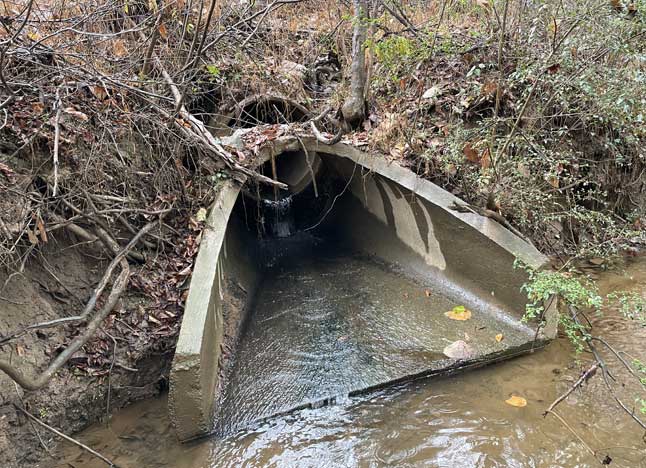
- Stormwater piping inspected for cracks, blockages, or sediment buildup
- Flared End Sections (FES) and Mitered End Sections (MES) evaluated for erosion control
- Pipe joint conditions flagged before they become washouts or voids
Detention and Retention Basins
- Excessive sediment buildup and outlet functionality checked
- Vegetation management assessed for water quality and flow regulation
- Embankment and outlet structure conditions documented
Filtration and Infiltration Systems
- Sand filters, bio-retention areas, and infiltration systems assessed for clogging
- Filtration media function verified against design specifications
Underground Detention Systems (UDS)
- Structural integrity, sediment accumulation, and outflow inspected
- Maintenance access points verified clear and functional
Documentation and Compliance
Documenting inspections with photos is crucial for tracking asset conditions over time and demonstrating compliance with Charlotte-Mecklenburg and NCDEQ requirements. Clear records of inlet structures, piping conditions, sediment accumulation, and filtration system performance help streamline maintenance planning and regulatory reporting.
Related Services
- Industrial Stormwater Compliance — NPDES, SWPPP, and corrective actions
- HOA Stormwater Inspections — multi-pond and common-area programs
- Sinkhole Repair — emergency response when inspections reveal voids
- Catch Basin Repair — inlet fixes identified during inspection visits
FAQ
How often do I need a stormwater inspection in Charlotte?
Charlotte-Mecklenburg Post-Construction Stormwater Ordinance typically requires annual inspections for SCMs/BMPs. Some development agreements require quarterly or semi-annual checks. If you’ve received an NMR, an inspection report is usually the first step to closing it out.
What does a stormwater inspection report include?
Reports cover each SCM or BMP on site: current condition, photos, identified deficiencies, and maintenance recommendations. We format reports to meet Charlotte, Mecklenburg County, and surrounding municipality requirements.
What happens if my stormwater system fails inspection?
You’ll receive a deficiency list with prioritized corrective actions. We can handle minor maintenance on the same visit. Larger repairs, like basin dredging or pipe fixes, get scoped and scheduled separately. Having a documented response plan helps if Charlotte-Mecklenburg follows up.
Can I use the inspection report to respond to a Notice of Maintenance Required (NMR)?
Yes. An inspection report that documents current conditions and a corrective action plan is typically what the city needs to see. We’ve helped property owners close out NMRs with proper inspection documentation.
Do you inspect underground detention systems?
Yes. We inspect underground systems, vaults, and proprietary devices. Confined-space entry is coordinated separately when required for deep vault access.
Do you offer stormwater inspection and maintenance services together?
Yes. We combine inspection visits with debris removal, vegetation management, and minor maintenance so you address deficiencies in one mobilization. Larger repairs are scoped separately.